Showing posts with label Fire. Show all posts

Friday, June 17, 2011

Droughts, heatwaves, floods Why extreme weather is the new normal


What was, until quite recently, predictable, temperate, mild and equable weather, guaranteed to be warmish and wettish, ensuring green lawns in August, now sees the seasons reversed and temperature and rainfall records broken almost every year. Sober government scientists at the centre for hydrology and ecology are openly using words like "remarkable", "unprecedented" and "shocking" to describe the recent physical state of Britain this year, but the extremes we are experiencing in 2011 are nothing to the scale of what has been taking place elsewhere recently. Read more on this topic at: http://www.guardian.co.uk/world/2011/jun/13/extreme-weather-flooding-droughts-fires

Monday, July 06, 2009

New in HOORC's Library: SAFARI project results

The Southern African Fire-Atmosphere Research Initiative (SAFARI) was an important component of the first ever international, intercontinental and interdisciplinary fire experiment that in 1992 involved more than 150 scientists from 14 nations. Fire in southern African savannas : ecological and atmospheric perspectives was published by the Witwatersrand University Press to share the results of the project with African students, fire practitioners, policy-makers and politicians. The book highlights the global atmospheric impacts of bush fires, as well as their role in maintenance of biological diversity, quality of grazing, nutrient cycling and overall conservation of fire-prone ecosystems. You can find the book in HOORC's Library.

Sunday, January 18, 2009

Recent research from HOORC

Water resources management model for Okavango River Basin from Kiker, Munoz-Carpena, Wolski, Cathey, Gaughan and Kim article


Published results of research by HOORC staff and associates recently added to the HOORC Library catalogue cover a wide range of topics relevant to management of the Okavango.


A study reported in The effects of soil cover on soil respiration and microbial population in the mopane (colophospermum mopane) woodland of North Western Botswana by Mabiletswane P. Siele, Tabo Mubyana-John and HOORC ecologist Casper Bonyongo in Dynamic Soil, Dynamic Plant found that fungi contribute significantly to soil structure and respiration under mopane tree canopy.

HOORC Deputy Director Moses Chimbari and C.J. Shiff's investigation of the potential use of the fruit of Jatropha curcas to kill snails that transmit schistosomiasis, A laboratory assessment of the potential molluscicidal potency of Jatropha curcas aqueous extracts, was published in the African journal of aquatic science.

Incorporating uncertainty into adaptive, transboundary water challenges : a conceptual design for the Okavango River basin by Gregory A. Kiker, HOORC researcher Piotr Wolski and associates, published in the International journal of risk assessment and management, explores models for management of transboundary water issues in the Okavango River Basin.

HOORC researchers Philippa Huntsman-Mapila and Susan Ringrose joined associates Tiercelin, Benoit, Diskin, Cotten and Hemond in investigating the origins of the formation of the Okavango's alluvial fan, reported in the African journal of earth sciences, Sediment geochemistry and tectonic setting: application of discrimination diagrams to early stages of intracontinental rift evolution, with examples from the Okavango and Southern Tanganyika rift basins.

HOORC researchers Susan Ringrose, Philippa Huntsman-Mapila and Cornelis Vanderpost also contributed to a study of changes in sediments that sheds light on palaeo-environmental change in the Okavango, reported in Diagenesis in Okavango fan and adjacent dune deposits with implications for the reccord of palaeo-environmental change in Makgadikgadi - Okavango - Zambezi basin, northern Botswana in the journal Geomorphology.

HOORC associate Michael Heinl collaborated with Mike Murray-Hudson, Jan Sliva and Budzanani Tacheba to find that fire plays a secondary role to flooding in affecting vegetation structure and tree density in the Okavango floodplain, reported as The relevance of fire frequency for the floodplain vegetation of the Okavango Delta, Botswana in the African journal of ecology.

HOORC researchers Ketlhatlogile and Belda Mosepele worked with associates Peter Moyle, Glenn Merron and David Purkey to write Fish, floods, and ecosystem engineers : aquatic conservation in the Okavango Delta, Botswana in Bioscience, an argument for fisheries as a key issue when analysing environmental flows in the Delta.

Communicating integrated water resources management : from global discourse to local practice -- chronicling an experience from the Boteti River sub-Basin, Botswana by Larry Swatuk and HOORC researcher Moseki Motsholapheko, published in Physics and chemistry of the earth, reviews the challenges of influencing opinion and beliefs in the context of integrated water resources management.


The same issue of Physics and chemistry of the earth, edited by HOORC researcher Dominic Mazvimavi, featured an article by Mazvimavi and HOORC environmental chemist Wellington Masamba, Impact on water quality of land uses along Thamalakane - Boteti river : an outlet of the Okavango Delta, calling for increased monitoring of fluctuations in water quality of the rivers flowing from the Delta.

You can find all these resources in HOORC's Library.

Friday, December 05, 2008

Africa as carbon sink

Field measurements in the Okavango Delta from the CarboAfrica site

UNPulse has alerted us to CarboAfrica, an international research project of 15 institutions from Africa and Europe. The project has released initial findings that indicate that Africa may be a carbon sink, meaning that it takes more carbon out of the atmosphere than it releases. The preliminary findings were the focus of Africa and Carbon Cycle: the CarboAfrica Project, a conference held in Accra, Ghana in late November 2008.

Government notices of interest to the Okavango community

From the Botswana Government Gazette, Vol. XLVI, no. 76, 21 November 2008

Republic of Botswana: Tender: Consultancy services for development of the oil industry margin model
5925
Republic of Botswana Dept. of Meteorological Services: Tender: Supply, installation and commissioning of five automatic weather stations
5961
Republic of Botswana Dept. of Forestry and Range Resources: Tender: supply and installation of fire towers
5962
Republic of Botswana: Tender: Supply of fire warning sign boards for Department of Forestry and Range Resources
5962
North West District Council: Tender: Kaure Ostrich Farm development
5976
North West District Council: Tender: Construction of ARV satellite clinic in Shakawe
5976


From the Botswana Government Gazette, Vol. XLVI, no. 77, 28 November 2008

Statutory Instrument No. 99 of 2008: of Diseases of Animals Act: Declaration of foot and mouth disease (infected area) order, 2008
C.660

Tender announcements and documents may also be found on the Government of Botswana web site. The entire issue of the Government Gazette may be read in HOORC’s Library.

Friday, September 19, 2008

Fire season


From University of Maryland's FIRMS site

HOORC geographer Professor Cornelis Vanderpost writes: "As we enter the season of fire and smoke, you may be interested to know that fires in southern Africa are monitored by satellite. See attached picture for fires detected during the 48 hours preceding yesterday. In HOORC's Library you can find Post-fire succession on savanna habitats in the Okavango wetland, Botswana by Michael Heinl, Jan Sliva, Michael Murray-Hudson and Budzanani Tacheba.

Wednesday, July 23, 2008

7th Southern Africa Fire Network (SAFNet) Workshop

The 7th Southern Africa Fire Network (SAFNet) Workshop will be held in Caprivi, Namibia on 22-26th September 2008. The workshop, Towards Effective Regional Fire Management, Policies and Operations Status aims to foster more effective and appropriate fire management policies and practices in Southern Africa through the use of remote sensing, GIS and other geo-spatial information technologies. Fire monitoring and research remains sporadic and fractured in Southern Africa, as is the case for the rest of the continent. Building capacity on fire research, generation of up to date fire information and formulating informed fire management policies and strategies are key to sustainable development and climate change mitigation and adaptation in Africa.

The workshop will include a demonstration on controlled burning and training sessions on the use of MODIS and Landsat satellite fire products for operational fire management.

The workshop organizers are calling for abstracts for oral presentations and posters. Those who wish to be considered for training sessions should provide their CV and a brief explanation on why they need this training. Abstracts and applications for training should be forwarded by 25th July 2008 to: Mark Tadross, University of Cape Town, South Africa with a copy to Opha Pauline Dube, University of Botswana.

In HOORC's Library, you can find A fire management plan for the Okavango Delta Ramsar site in Botswana : final report.

Tuesday, January 22, 2008

Africa Palaeofires Workshop, October 2008


The Global Palaeofire Working Group (GPWG) is one component of the International Geosphere-Biosphere Programme’s cross-project activity on fire. The aim of the GPWG is to explore the relationships between changes in fire regimes, climate, vegetation and human activities as documented by the palaeo-record. Since mid-2006 the group has engaged an international network of scientists to create a research database of charcoal records. The first version of the database was used to analyse global patterns in fire regimes since the last glacial maximum. Although Africa was included in the global synthesis, the current database contains very few sites from the continent, and the group decided that data-gathering for this region should be a major priority in the coming year. To encourage more scientists from the continent to join the GPWG, to contribute to the database, and to participate in ongoing analyses and activities, there will be a workshop focusing on Africa, most likely in Nairobi in October 2008. The goal of the workshop is to analyse the
available charcoal data from Africa. Registration for the workshop has been extended to mid-February -- see the group's web site for more information.

Wednesday, January 09, 2008

New in HOORC's Library: remote sensing dissertation

Landcover classification product aggregated to vegetation type from Neuenschwander dissertation
Remote sensing of vegetation dynamics in response to flooding and fire in the Okavango Delta, Botswana, Amy Neuenschwander's PhD dissertation for the University of Texas at Austin, assesses the spatio-temporal distribution of flooding and fire and their subsequent influences on
vegetation as represented by vegetation index trajectories in the Okavango Delta. The work's characterization of spatio-temporal distribution of flooding and fire regimes with the temporal dynamics of vegetation spectral response via a time-series of remotely sensed data informs ecosystem and disturbance theory and presents new methodological applications for
multi-temporal change analysis. You can find the dissertation in HOORC's Library.

Friday, November 09, 2007

Fire ecology publication

With the first rains coming to Ngamiland these past few weeks and HOORC's Library garden full of the musical calls of African long tailed shrikes, the Okavango's dry season fires seem far in the past. Publication of Post-fire succession on savanna habitats in the Okavango Delta wetland, Botswana by Michael Heinl, Jan Sliva, HOORC researcher Mike Murray-Hudson and Budzanani Tacheba in a recent issue of the Journal of Tropical Ecology reminds us that fire is a natural part of the Delta's ecology. The researchers studied vegetation at 153 sites that had been without fire for two to three years to conclude that post-fire succession could be described as not only being driven by the life history of the species, but also by seedbank dynamics and plant mobility in early successional stages, and by competition and niche differentiation in late-successional stages. You can find the article in HOORC's Library.

Wednesday, September 12, 2007

Boteti Flows at Makalamabedi


The Boteti river, outflow of the Okavango Delta, this year flowed beyond Makalamabedi where river flow had not been experienced for many years. A Hoorc team working on the ephemeral rivers project was present when the river progressed through the Makalamabedi area. The photographs shows the river advancing amid active fires in the valley . To help the progress of the flow, local farmers burned the fences around their molapo fields to remove any obstructions to the advancing waters.


Tuesday, July 31, 2007

New in HOORC's Library: Small mammal responses to fire

Small mammal responses to fire in the Okavango Delta : a PhD dissertation submitted to the University of Cambridge by Militsa Plavsic is the second dissertation coming from HOORC's project, Effects of different fire regimes on the vegetation in southern African savanna and floodplain ecosystems. Michael Heinl's dissertation, Fire regime and vegetation response in the Okavango Delta, Botswana for the Technische Universitat Munchen, Freising-Weihenstephan, Germany, was completed in 2005. The project is mapping fire frequencies over the past 15 years and conducting fieldwork in locations with variable fire histories, focusing on vegetation characteristics, soil characteristics and small mammals. More about fire monitoring in the region.

Tuesday, June 05, 2007

Wildfire conference

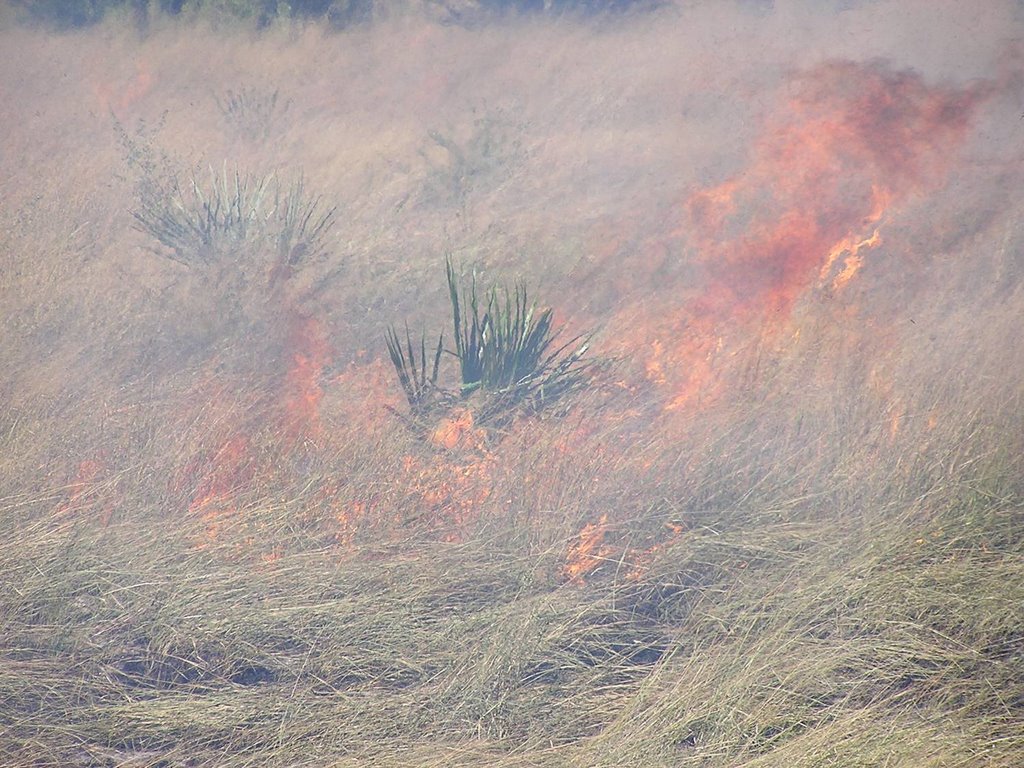
Fire in the Okavango Delta April 2007

The 4th International Wildland Fire Conference was held in Sevilla, Spain, 14-17 May 2007 under the auspices of the United Nations International Strategy for Disaster Reduction (UNISDR), the Food and Agriculture Organization of the United Nations (FAO) and the European Commission. The meeting brought together 1531 participants from 88 countries to discuss fire science, fire management and fire management training.

Among the recommendations included in an end of conference statement were that the international wildland fire community pursue the development of a globalscale international resource sharing strategy to assist countries with fire management planning activities (including prescribed fire for ecological purposes and fuels management), that scientific research programmes addressing the consequences of changes of climate, land use and land cover, and socio-economic changes on fire regimes, environment and society be supported at all levels, and that the UNISDR Global Wildland Fire Network, the Regional Wildland Fire Networks and the Secretariat of the global network, the Global Fire Monitoring Center (GFMC) be supported by national agencies and international donors.

On the conference website you can read a summary of the presentation by S.R. Ngakane, A. Hoffman, G.J. Mafoko and J. Ramonthso, Fire management in Botswana - Efforts of the department of Forestry and Range Resources".

Monday, October 30, 2006

New journal article by HOORC researchers

Fire activity on drylands and floodplains in the southern Okavango Delta, Botswana by Micheal Heinl, P. Frost, Cornelis Vanderpost and J. Sliva in a recent issue of the Journal of Arid Environments, identifies Okavango Delta floodplains as centres of fire activity, serving as sources of fires spreading into dryer lands. The study used satellite imagery from the years 1989 to 2003 to analyse the temporal and spatial distribution of fires. You can find the article in HOORC's Library.

Tuesday, October 17, 2006

Mapping fires in the Okavango Ramsar site


Flying over the Okavango Delta on the weekend, the skeletal outlines of downed, burnt trees were clearly visible: their white ash remains like reverse shadows of trees still standing. Veld fires burning at the eastern edge of the Delta Ramsar site have been extinguished by early rains. You can now track such fires through an online resource, Web Fire Mapper: Botswana. The University of Maryland's Department of Geography is cooperating with the Botswana
Department of Forestry and Range Resources, with the assistance of NASA and MODIS, to produce an online mapping service for wildfires in Botswana. You can use the resource to create online maps that include rivers, protected areas, roads and firebreaks, and track fires by year, the past seven days and the last 48 hours.

Monday, September 11, 2006

Upcoming Southern Africa fire workshop

The Sixth Southern Africa Fire Network (SAFNet) workshop will be held in Maputo, Mozambique, 2-4th October 2006. A regional network that fosters collaborative efforts in fire monitoring and management in southern Africa, SAFNet’s purpose is to enhance the use of information from field observations and remote sensing of fires for natural resource management in southern Africa. SAFNet is a Global Observation for Forest and Land Cover Dynamics (GOFC/GOLD) regional fire network and contributes to meeting the goals of the GOFC/GOLD program.

Thursday, July 27, 2006

Okavango Fire article in Landscape Ecology Journal


A paper titled "Interactions between fire and flooding in a southern African floodplain system (Okavango Delta, Botswana)" was recently published by HOORC associated researchers Heinl, Neuenschwander, Sliva and Vanderpost in the international journal Landscape Ecology.
Using analysis of 98 satellite images covering 15 years, the paper shows that there are higher fire frequencies on floodplains than on drylands because of higher biomass production and fuel loads. Fire occurrence on drylands shows a correlation with annual rainfall events, while fire frequency on floodplains is determined by flood frequency. The highest potential to burn was found for floodplains that get flooded about every second year. Landscape Ecology, Volume 21, 5, 699 - 709. [abstract]

Thursday, July 06, 2006

Fire and small mammals presentation at HOORC

Photo from M Plavsic

Cambridge University PhD candidate Mila Plavsic shared her research findings today in a presentation at HOORC about the response of small mammals to fire in the southern Okavango Delta. Plavsic has been looking at establishing when and under what conditions small mammals such as mice, gerbils and shrews recolonise an area that has been abandoned because of burning. Small mammals are an important component in the food chain -- prey for 23 mammal species, 53 bird species and at least 16 snake species in the Delta -- so understanding their habitat and behaviour contributes to our knowledge of habitat requirements of all animals. You can find an article about Plavsic's work, Footprints in the ashes : fire and mice in the Okavango Delta, in HOORC's Library.

Monday, June 05, 2006

Fires and forests in Caprivi

Caprivi Strip, Zambezi and Okavango Delta from NASA’s Visible Earth

Fires in Namibia’s Caprivi Strip are in the news reported by allAfrica.com, as well as the launch of community forests in Kavango region. Community forest agreements to establish eight community forests of Bukalo, Masida and Lubuta in Caprivi region, M'kata in West Tsumkwe, Mbeyo, Ncamagoro, Ncaute and Ncumcara in Kavango region have been gazetted, giving communities legal ownership of the forest resources in these areas. In HOORC's Library, you can find People managing forests : the links between human well-being and sustainability from the World Resources Institute.

Tuesday, April 04, 2006

ODMP fire management work

The inception report for Component Eight of the Okavango Delta Management Plan work, Vegetation Resource Management Fire Management Plan, was presented at HOORC last week by consultants from Environet Solutions. Fire has been used for centuries by people living in the Okavango Delta to control vegetation. Work on this part of Component Eight, to be completed in July 2006, is focused on collection and analysis of information about the long term effects of this burning on the ecology of the Delta Ramsar site. The report can be found in HOORC’s Library.